Santiago Bernabéu: The Man Who Built Real Madrid and the Stadium That Became a Legend.

Abdullah Al Masum
Tue, Oct 27, 2026
On the night of 8 May 2024, Real Madrid were running out of time. Bayern Munich were leading in the Champions League semi-final, and Madrid's hopes of reaching another European final were fading. Then, in the 88th minute, Joselu scored. Three minutes later, he scored again. Within moments, a match that seemed to be slipping away became another unforgettable night at the Santiago Bernabéu. It was another chapter in a story Madrid fans knew well: Rodrygo’s late double against Manchester City in 2022, Karim Benzema’s stunning comeback against PSG in 2022, and Cristiano Ronaldo’s hat-trick against Wolfsburg in 2016 had all shown how quickly the impossible could become reality in Madrid.
For Real Madrid supporters, those moments feel almost familiar. Over the years, the stadium has witnessed extraordinary comebacks that have made it one of football's most talked-about grounds. But behind its reputation lies a much longer story, beginning with a man whose ambition helped transform Real Madrid into a European powerhouse.
That man was Santiago Bernabéu de Yeste.
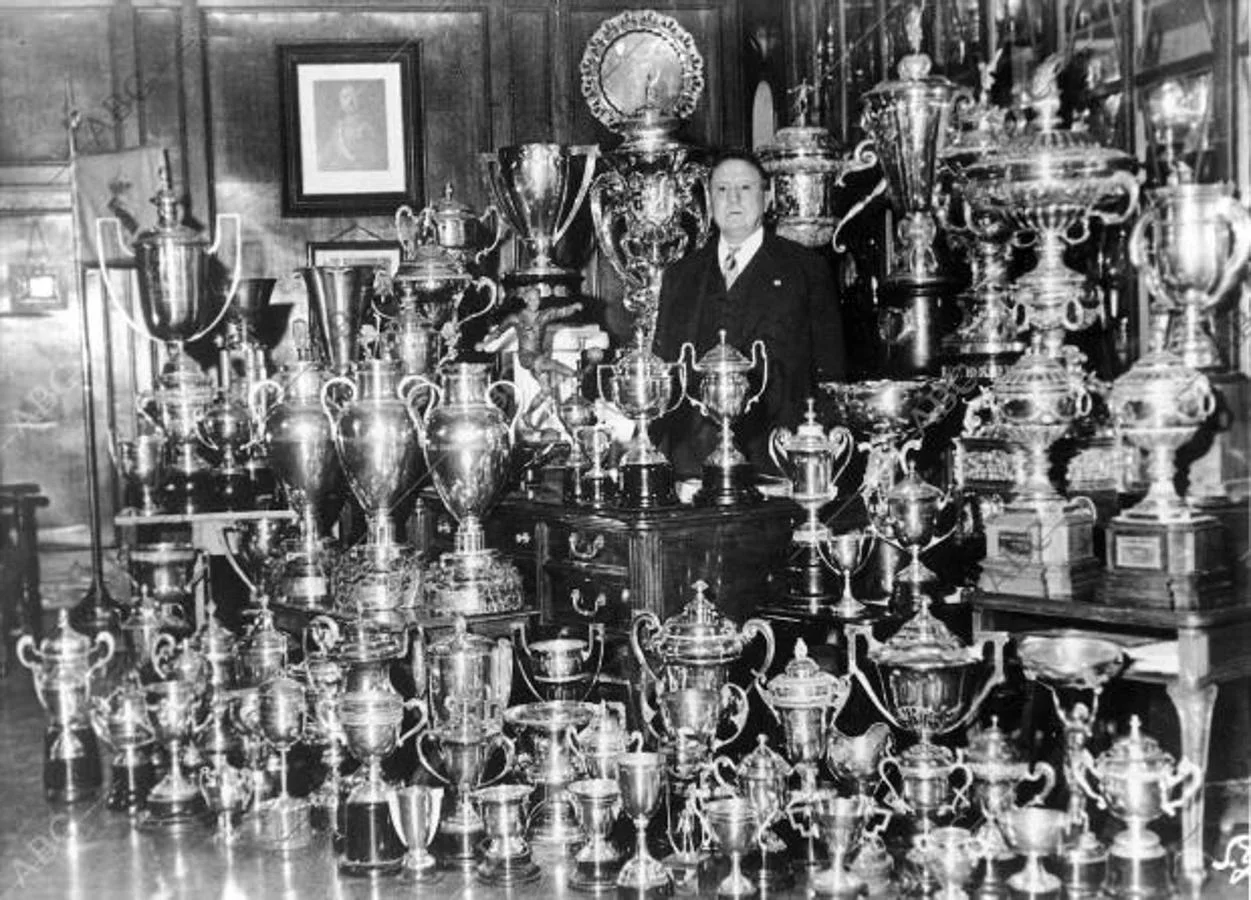
Image: Don Santiago Bernabéu poses in April 1964 with all the trophies won by his team. (Archivo ABC)
The Man Behind Real Madrid's Rise
Born on 8 June 1895 in Almansa, Spain, Santiago Bernabéu joined Real Madrid's youth team at the age of 14. He soon progressed to the first team, where he became a respected player and captain. After retiring in 1927, he continued working for the club as a director before becoming its president in 1943.
Bernabéu was more than a former player who took charge of his club. He had a clear vision of what Real Madrid could become. He understood that lasting success required more than talented footballers. The club needed better facilities, a stronger organisation, financial stability, and the ambition to compete beyond Spain. His presidency brought significant changes to the institution. He strengthened the club's organisational structure, supported its different sporting sections and helped build a professional environment around the first team. He also played an important role in bringing leading footballers to Madrid, including Alfredo Di Stéfano, whose arrival helped shape one of the greatest teams in European football history.
Between 1956 and 1960, Real Madrid won the first five editions of the European Cup. The club added a sixth title in 1966. Those achievements established Madrid as a dominant force in European football and helped create the international reputation it enjoys today. Bernabéu's contribution was not limited to trophies. He helped build the institution that could continue competing at the highest level long after his own time at the club. He remained president until his death on 2 June 1978.
Source: Real Madrid's official history of Santiago Bernabéu.
Building a Stadium for a Bigger Ambition
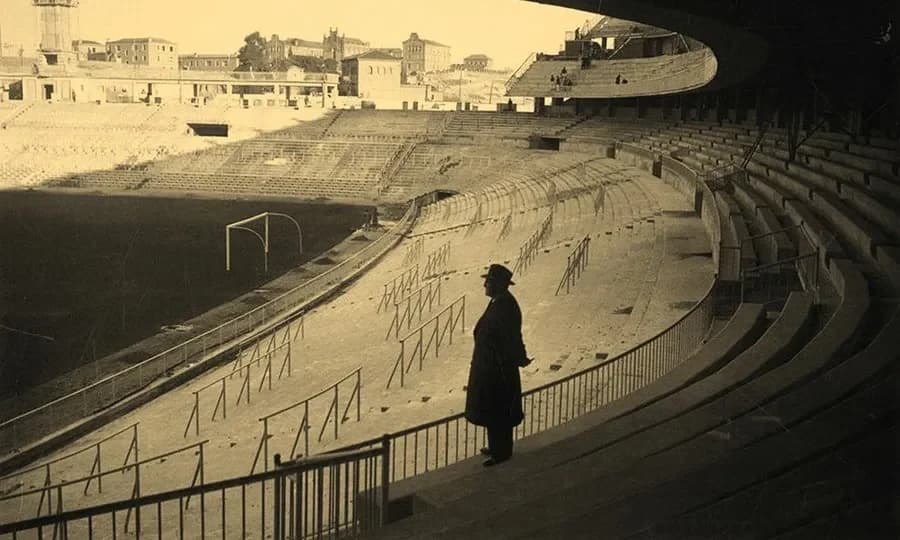
When Bernabéu became president, Real Madrid's existing Chamartín ground was no longer large enough for the club's growing support. Years of renovation had increased its capacity, but demand continued to rise. Bernabéu believed that a bigger stadium could give the club the space and resources it needed to grow. The new stadium, known as Nuevo Chamartín, opened on 14 December 1947. Real Madrid celebrated the occasion with a 3–1 victory over Portuguese side Os Belenenses, with Sabino Barinaga scoring the first goal at the ground.
The project did not stop with the opening. Expansion work began in 1952, and the enlarged stadium was inaugurated in June 1954. In 1955, the club's members unanimously decided to name it the Santiago Bernabéu Stadium in honour of their president. The decision reflected the close connection between the man and his greatest project. Bernabéu had not simply overseen the construction of a football ground; he had helped create a home that reflected the club's growing ambitions. His vision was ahead of its time. A larger stadium could accommodate more supporters, generate greater revenue and help Real Madrid attract the best players. In modern football, where stadiums are central to a club's commercial success, that thinking remains relevant.
The stadium has since undergone several major renovations. It was modernised for the 1982 FIFA World Cup, expanded further in the 1990s and transformed again during the renovation project that began in 2019. The modern Bernabéu combines its historic identity with a retractable roof, an advanced playing surface system and facilities designed for sporting and other major events.
Sources: Nuevo Chamartín's history and the Santiago Bernabéu's official stadium history.
When a Stadium Becomes a Legend
A stadium's reputation is not built through architecture alone. It develops through the matches played there, the emotions experienced by supporters and the memories that are passed from one generation to another. The Santiago Bernabéu gradually became associated with a particular belief: even when Real Madrid appear close to defeat, the match may not be over.
This reputation was already developing in the 1980s. During the 1984–85 UEFA Cup semi-final, Madrid lost 2–0 away to Inter Milan but won the return leg 3–0. The following season, they again faced Inter, this time overturning a 3–1 first-leg defeat with a 5–1 victory after extra time.
These matches helped establish the spirit of the “remontada”, the Spanish word for a comeback. Juanito, one of Madrid's most passionate players, became associated with the famous phrase:
“Ninety minutes at the Bernabéu is a very long time.”
The words captured an idea that would continue to define the stadium's reputation. A team might have the advantage on the scoreboard, but playing at the Bernabéu meant facing an opponent that refused to accept defeat easily.
The Comebacks That Strengthened the Myth
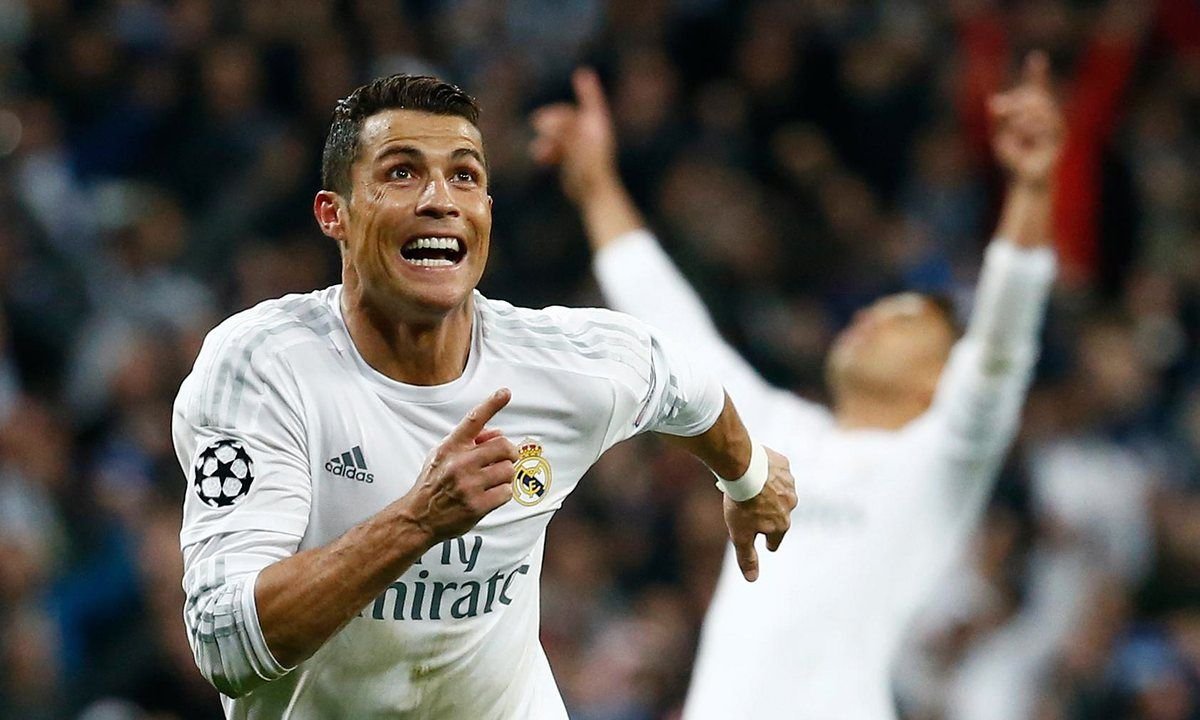
Image: Cristiano Ronaldo's hat-trick vs Wolfsburg in 2016.
That belief found a modern expression in April 2016, when Real Madrid faced Wolfsburg in the Champions League quarter-finals. After losing the first leg 2–0 in Germany, Madrid needed a strong response at home. Cristiano Ronaldo delivered a hat-trick in a 3–0 victory, sending the team into the semi-finals.
Six years later, the Bernabéu witnessed a remarkable series of European nights.
Against Paris Saint-Germain in March 2022, Madrid overturned a first-leg deficit through Karim Benzema's second-half hat-trick. Chelsea came close to eliminating them in the quarter-finals, but Madrid eventually progressed 5–4 on aggregate after extra time.
Chelsea presented another challenge in the quarter-finals. Having lost the first leg 3–1, the English side led 3–0 at the Bernabéu, putting Madrid 4–3 behind on aggregate. Rodrygo’s 80th-minute volley, created by Luka Modrić’s remarkable outside-of-the-boot pass, forced extra time. Benzema then headed home in the 96th minute. Madrid lost the second leg 3–2 but won the tie 5–4 on aggregate.
Then came Manchester City. Trailing 5–3 on aggregate as the second leg approached its final minutes, Madrid seemed destined for elimination. Rodrygo scored in the 90th minute and again in added time to force extra time, inspiring Peter Drury's iconic statement, "they prayed for miracles and miracles arrived." Benzema then converted a penalty to secure a 3–1 victory on the night and a 6–5 aggregate win.
These matches were dramatic, but were not identical. Each required different interventions from players, managers and opponents. What connected them was Madrid's ability to keep competing when the outcome appeared to be moving against them.
The Bayern Munich semi-final in May 2024 added another chapter. After Alphonso Davies gave Bayern the lead, Madrid pushed for an equaliser. Joselu, introduced as a substitute, capitalised on a rebound in the 88th minute and scored again in added time. Madrid won 2–1 on the night and 4–3 on aggregate, reaching their 18th European Cup final.
The atmosphere alone did not produce these victories, but the Bernabéu gave each attack a sense of urgency and each comeback a stage on which to become part of football history. They involved individual quality, tactical decisions, sustained pressure and, at crucial moments, mistakes by opponents. Yet the setting gave every late attack an added sense of possibility. Over time, nights like these strengthened the belief that at the Bernabéu, a match is never truly over until the final whistle.
Sources: UEFA's report on the Manchester City comeback, Real Madrid 2-3 Chelsea, and UEFA's report on the Bayern Munich semi-final.
Is the Bernabéu a Tactical Weapon?
It is tempting to describe the Bernabéu as a magical place where Real Madrid can overcome any obstacle. For supporters, that belief is part of the club's appeal. But understanding the stadium's influence requires looking beyond the mythology.
A passionate home crowd can affect a match in several ways. Its reaction to a successful tackle, an attacking run or a dangerous chance can raise the energy inside the ground. That atmosphere may encourage home players to take greater risks and sustain their efforts, while visiting players face the pressure of defending in a hostile environment. The effect is not always straightforward. A demanding crowd can become impatient when the team struggles to create chances. The pressure to attack can lead to hurried decisions, misplaced passes or defensive gaps. Visiting teams can also respond intelligently by controlling possession, slowing the tempo and exploiting the spaces left behind.
The Bernabéu, therefore, is not a tactical weapon in the literal sense. It does not guarantee victories or explain every comeback. Its influence is better understood as one part of a wider combination of confidence, pressure, individual ability and tactical execution. What makes Madrid's European nights so compelling is the uncertainty. The crowd may believe a comeback is possible, but the players still have to make it happen.
The Man, the Stadium and the Legacy
Santiago Bernabéu died in 1978, but his influence continues to shape Real Madrid. His presidency helped establish the club's sporting ambitions, institutional structure and international standing. The stadium bearing his name has carried that ambition through generations of footballers and supporters. The modern Bernabéu is very different from the ground that opened in 1947. Its facilities have evolved, its capacity and design have changed, and the business of football has grown enormously. Yet its historical significance remains tied to the vision of the man who believed Real Madrid needed a home equal to its ambitions.
Perhaps that is why the stadium's famous nights resonate so strongly. They are not simply stories of late goals or unlikely victories. They are part of a history built over decades, in which success has created expectations and those expectations have become a source of belief. No stadium can promise a comeback, and no club can win every match. But the Santiago Bernabéu has accumulated enough unforgettable moments to make the possibility of another one feel real.
Bernabéu helped build the institution. Generations of players and supporters built its mythology. Together, they created something greater than a football ground: a place where history gives hope, and where the final whistle is sometimes the only thing that can end the dream.
Discussion
Share your thoughts with the community
Loading comments…